
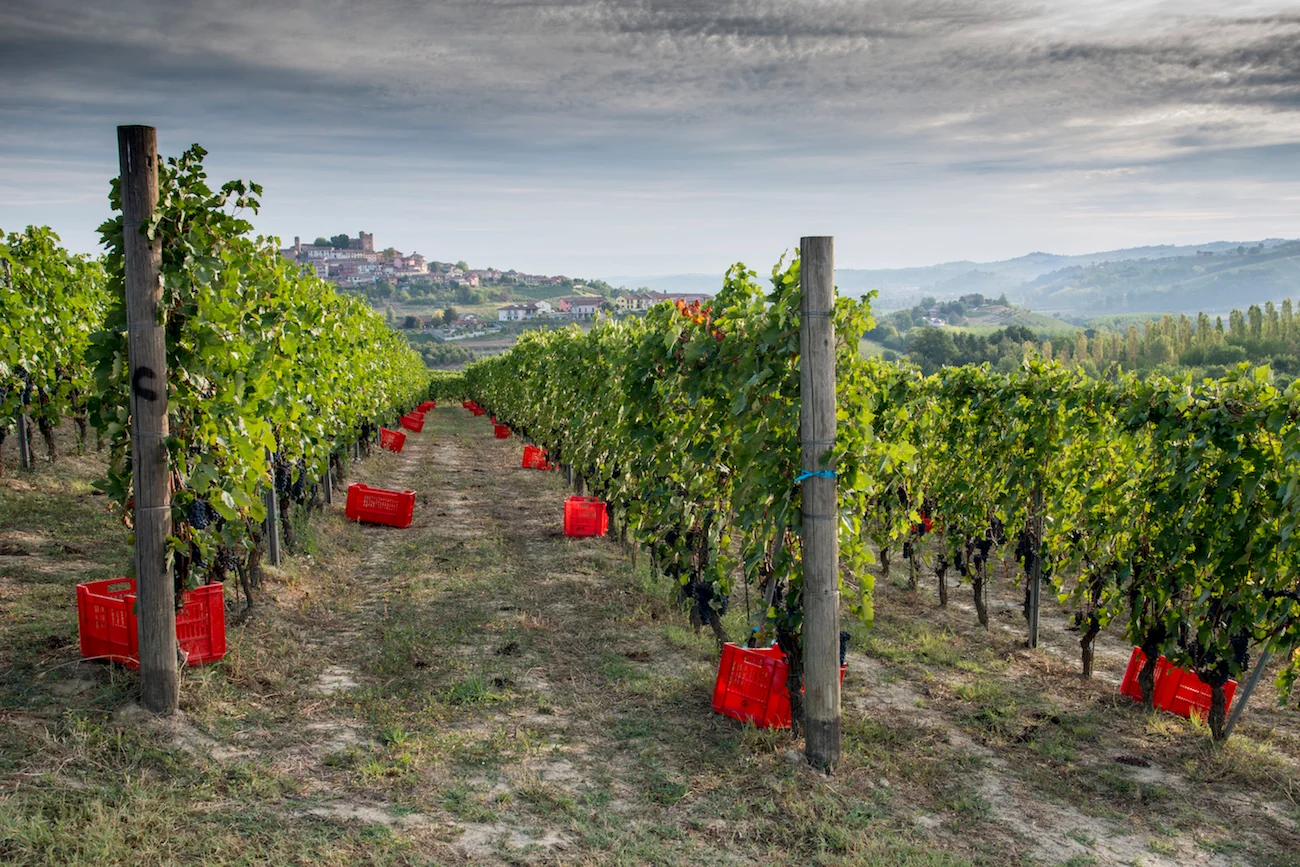
Nebbiolo is one of the most planted varieties in Piedmont and it generates some of the most important Italian wines. The name Nebbiolo comes from the Italian word nebbia, which means fog—a nod to the dense Autumn fog blanketing the vineyards during the October harvest.
While Piedmont is widely considered the ultimate Nebbiolo region, history reveals a surprise. The grape seems to be originally from another part of Italy entirely: the northern part of Lombardy, in the Valtellina valley, where Nebbiolo—locally called Chiavennasca—has been cultivated for centuries under the Valtellina appellation.
Outside the appellation areas Nebbiolo stays Nebbiolo but, depending on which of these three historic areas it is grown in—and the rules governing its production—Nebbiolo transforms into fundamentally different expressions:
1. Barolo
In the Barolo commune—within a strictly selected and controlled area, and provided it is produced according to the appellation’s rules—Nebbiolo becomes Barolo.
Often called “the king of wines and the wine of the kings,” Barolo earned this legendary title because Piedmont was the region where the monarchy was based. It is a wine that can age for a very long time, changing dramatically over time and becoming one of the most beautiful wine experiences.
- The Terroir: Grown in the clay, marl, and limestone soils of the Langhe hills.
- The Profile: Intense, deeply structured, and powerful, demanding time in the cellar to soften its formidable tannins and high acidity.
- Growers like Cantine Ascheri highlight this traditional, long-lived style through historic vineyard sites.
2. Barbaresco
Not too far away, in another commune called Barbaresco, the exact same grape undergoes a fascinating shift.
- The Terroir: Maritime influences and slightly warmer, sandier soils lead to earlier ripening.
- The Profile: While still 100% Nebbiolo, Barbaresco trades raw power for perfume, elegance, and silkier tannins, offering a brighter, more approachable expression in its youth.
- The finely detailed and aromatic expressions from Albino Rocca offer an excellent window into this softer side of the region.
3. Valtellina
When grown up on the steep mountainsides of Lombardy, the grape adapts to a completely different mountain character. In this single shared valley appellation, winemakers traditionally craft the grape into two distinct styles:
- Valtellina Superiore: Cultivated on breathtaking, heroically terraced alpine slopes facing south. This mountain climate yields a wine that is lighter in color and body, but vibrantly alive with striking acidity, mineral notes, and fresh alpine herbs.
- The mountain-grown wines of Mamete Prevostini illustrate this high-altitude energy and focus well.
- Sforzato di Valtellina: Crafted in the exact same region using the ancient appassimento process. The finest grape bunches are harvested and laid out on racks to dry for several months over the winter, evaporating water and concentrating the juices. This produces Lombardy’s dry answer to Amarone—rich, full-bodied, and higher in alcohol, balancing the grape’s natural high acidity with lush, dried-fruit flavors and velvety tannins.
A True Italian Chameleon
From the foggy hills of Piedmont to the terraced alpine cliffs of Lombardy, Nebbiolo uniquely mirrors the diverse terroir of Northern Italy in every bottle.